When Victory Paused for Humanity: The Quiet Moment Between Bo Nix and Trey Lance That Defined a Night in Denver

The scoreboard at Empower Field at Mile High told a simple story. The Denver Broncos had just secured a convincing 19–3 victory, a defensive masterclass that sent fans into celebration and reaffirmed the team’s growing confidence. Orange and blue confetti seemed ready to fall, the crowd roared, and players embraced in the familiar chaos that follows a hard-earned win. But while most eyes were fixed on the triumph, a far more powerful story was unfolding quietly on the opposite sideline—one that had nothing to do with points, statistics, or standings.
Chargers quarterback Trey Lance sat alone on the bench, helmet off, head buried in his hands. For a young quarterback still trying to define himself in the NFL, it had been one of the most difficult nights of his career. The Broncos’ defense suffocated him from the opening drive, collapsing pockets, disrupting timing, and forcing him into mistakes that echoed louder than the boos of the crowd. Every snap seemed heavier than the last, and when the final whistle blew, the weight of the loss was unmistakable.
In moments like these, the NFL can feel unforgiving. Cameras capture every misstep, social media magnifies every mistake, and the narrative machine moves on without mercy. Quarterbacks, more than any other position, carry the burden of public judgment. Wins elevate them to heroes; losses leave them exposed and isolated. As the Chargers’ sideline emptied and celebrations erupted across the field, Lance remained seated, alone with his thoughts, replaying every throw he wished he could take back.
That was when something unexpected happened.
From the middle of the field, amid hugs and congratulations, Bo Nix noticed Lance. Nix had every reason to stay where he was. He had just led his team to a decisive win, outplaying the opposing offense and reinforcing his own place as the leader of a franchise hungry for stability at quarterback. The moment belonged to him and the Broncos. No one would have questioned it if he had simply joined the celebration and walked off the field.
Instead, Nix did something few anticipated.
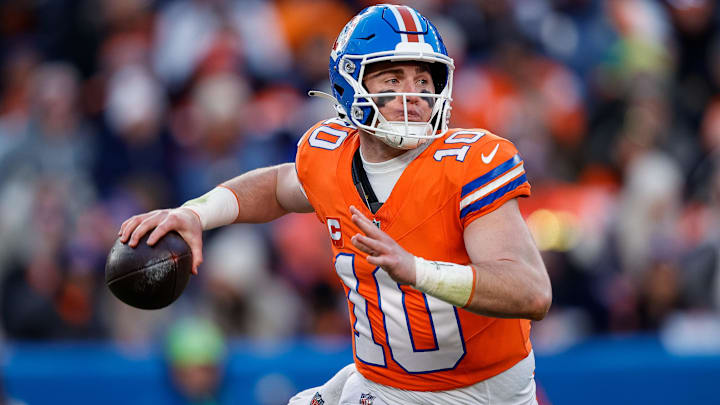
He quietly broke away from his teammates and walked across the field, past the painted logos and scattered equipment, toward the Chargers’ bench. There was no camera crew following him, no dramatic buildup, no announcement. Just one quarterback approaching another in silence. When Nix reached Lance, he didn’t hesitate. He put an arm around him and pulled him into an embrace that lasted longer than most postgame handshakes.
Witnesses later described the moment as striking in its simplicity. Two quarterbacks. One winner. One loser. No speeches, no grand gestures—just words exchanged between two players who understood each other in a way few others could. Whatever Nix said, it wasn’t meant for microphones or headlines. It was meant for a fellow professional at one of the lowest points a quarterback can feel.
In a league built on competition, moments like this are rare. The NFL thrives on rivalries, trash talk, and the relentless pursuit of dominance. Yet beneath the helmets and highlights are human beings navigating immense pressure. Nix’s decision to cross the field wasn’t about sportsmanship as a headline—it was about empathy. It was a recognition that while he had won the game, Lance was fighting a different battle entirely.
For Broncos fans, the moment resonated deeply. Denver has seen its share of quarterback struggles in recent years, and supporters understand how quickly the narrative can turn against a young signal-caller. Watching their own quarterback show restraint, awareness, and compassion only strengthened the connection between Nix and the fan base. It suggested maturity beyond the box score, a leader who understands that representing a franchise extends beyond touchdowns and wins.
Former players and analysts quickly took note. Several pointed out that quarterbacks live in a uniquely isolating world. They are praised when things go right and blamed when they go wrong. Few positions demand such mental resilience. When one quarterback reaches out to another after a tough loss, it sends a message that transcends rivalry: you are not alone, and one game does not define you.
For Trey Lance, the impact of that moment may never be fully known. Perhaps it was a brief reminder that setbacks are part of the journey. Perhaps it offered reassurance that respect still exists even in defeat. Or perhaps it simply gave him a moment to breathe before facing the inevitable criticism and self-doubt that follow a performance like that. Whatever the case, the image of Lance no longer sitting alone, but standing with an arm around his shoulders, spoke volumes.
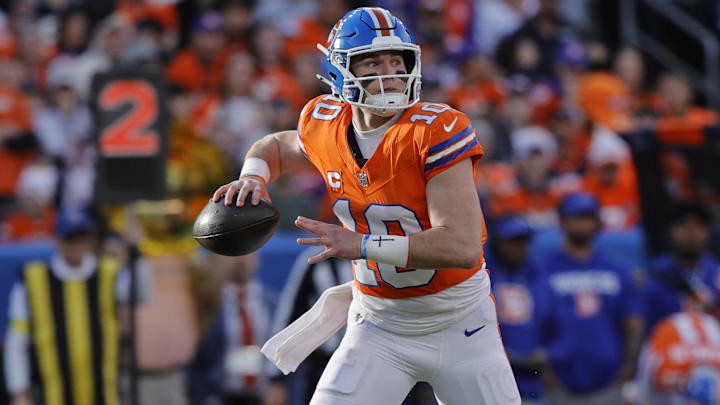
The beauty of the moment lies in its contrast. While the stadium roared and celebrated dominance, the most meaningful exchange happened away from the noise. While fans focused on the final score, the real takeaway was invisible to many in real time. It wasn’t until clips began circulating online that the wider NFL audience noticed what had happened—and why it mattered.
This was not about pity, nor was it about diminishing the Broncos’ victory. Denver earned every point of that 19–3 win through discipline, preparation, and execution. It was about acknowledging that the game leaves marks that don’t show up on stat sheets. It was about leadership defined not by words in a press conference, but by actions taken when no one expects them.
In an era where athletes are often judged by their bravado or viral moments, Bo Nix delivered something different. He delivered perspective. He reminded fans that football, at its core, is played by people who feel disappointment and pressure as intensely as anyone else. And in doing so, he gave the NFL a moment worth remembering long after the final whistle faded.
The Broncos walked off the field that night as winners in every sense. Not just because they controlled the game, but because their quarterback showed the kind of character that franchises spend years searching for. Long after the score is forgotten, this quiet walk across the field may be what endures—a reminder that sometimes, the most powerful plays happen after the game is already over.