
A $1.5 Billion Gamble That Could Redefine Baseball: Inside the Chicago Cubs’ Bold Vision to Transform Wrigley Field Forever
In a move that has instantly electrified the baseball world, Chicago Cubs chairman Tom Ricketts has unveiled an ambitious $1.5 billion redevelopment plan that promises to reshape not only Wrigley Field, but the very future of the North Side of Chicago. Partnering with a major investment group, the Cubs are preparing to turn one of the most iconic venues in global sports into a century-defining landmark—one that blends history, luxury, and modern entertainment on an unprecedented scale.
For more than a century, Wrigley Field has stood as a cathedral of baseball. Its ivy-covered walls, hand-operated scoreboard, and tightly packed grandstands have been frozen in time, resisting the sweeping modernization that has transformed stadiums across professional sports. But now, the Cubs are signaling that preservation and evolution no longer need to be opposites. Instead, this project aims to fuse tradition with innovation in a way that could set a new standard for historic franchises worldwide.
At the heart of the plan is a complete reimagining of the Wrigley Field campus. While the stadium itself will retain its unmistakable character, the surrounding area is set for a dramatic transformation. The proposed development includes a luxury hotel designed to cater to fans, tourists, and visiting teams alike—positioned just steps from the ballpark gates. With premium accommodations overlooking the field and the vibrant streets of Wrigleyville, the hotel is expected to become a destination in its own right.
Beyond hospitality, the Cubs envision an expanded entertainment and shopping district that will operate year-round. This isn’t merely about adding restaurants or retail space; it’s about creating an ecosystem that keeps Wrigley Field alive far beyond the final out of a game. Concert venues, interactive fan experiences, and curated shopping zones are all part of a plan designed to turn the area into one of America’s most dynamic sports neighborhoods.
Perhaps the most emotionally charged element of the project is the creation of a one-of-a-kind Cubs heritage museum. More than a traditional trophy room, the museum is being designed as a living archive of the franchise’s 150-year history. From the heartbreak of generations without a championship to the euphoria of the 2016 World Series triumph, the museum will immerse visitors in the stories that have made the Cubs one of the most beloved—and tormented—teams in sports.
According to those close to the project, the museum will feature cutting-edge technology, including interactive exhibits, archival footage, and personal artifacts from legendary players. The goal is not just to tell the Cubs’ story, but to let fans feel it—reliving moments of triumph and despair that have bonded generations of supporters.
Financially, the $1.5 billion investment represents one of the largest private redevelopment projects in Major League Baseball history. It is a clear statement of intent from ownership: the Cubs are not content with being guardians of the past. They want to be architects of the future. By investing at this scale, the organization is betting that Wrigley Field can remain competitive with modern ballparks while retaining the soul that makes it sacred.
This vision also reflects a broader shift in how sports franchises view stadiums. No longer just venues for games, ballparks are becoming mixed-use hubs that drive economic activity, tourism, and community engagement. For the Cubs, the redevelopment is expected to create thousands of jobs during construction and permanent employment opportunities once completed, injecting new life into the local economy.
Yet such a bold plan does not come without risk—or controversy. Purists have long argued that Wrigley Field should remain untouched, fearing that modernization could erode the authenticity that defines it. The Cubs, however, are emphasizing that this project is about enhancement, not erasure. Key architectural elements, sightlines, and traditions are expected to be preserved, even as new layers are added around them.
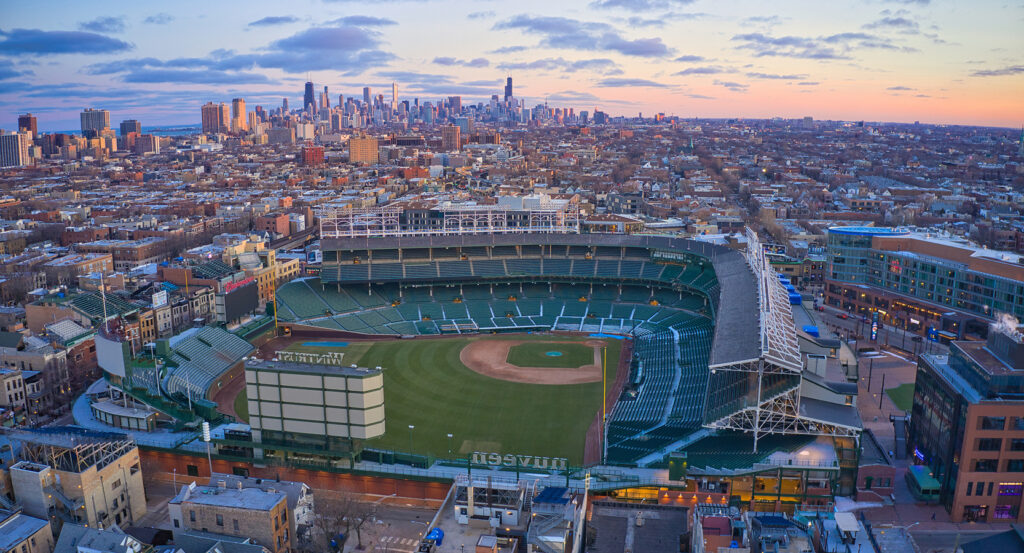
What makes this announcement resonate so powerfully is its timing. In an era where many historic franchises struggle to balance nostalgia with relevance, the Cubs are attempting to do both at once. They are acknowledging that the future of sports entertainment demands immersive, year-round experiences, while also recognizing that Wrigley Field’s magic lies in its history.
For fans, the implications are enormous. Imagine watching a game from a hotel balcony, exploring a museum that captures the soul of the franchise, and stepping into a vibrant district that celebrates baseball culture long after the crowd has left the stands. It is a vision that transforms a day at the ballpark into a full-scale experience.
Across Major League Baseball, executives and owners are watching closely. If successful, this project could become a blueprint for other historic franchises seeking renewal without reinvention. Wrigley Field has always been more than a stadium—it is a symbol. Now, it may also become a model for how tradition and ambition can coexist.
As details continue to emerge and construction timelines take shape, one thing is already clear: the Cubs are making a statement that will echo far beyond Chicago. This is not just an upgrade. It is a declaration that Wrigley Field is not finished writing its story.
More than a hundred years after it first opened its gates, the Friendly Confines are preparing for their most dramatic chapter yet. And if this $1.5 billion vision becomes reality, the future of baseball on the North Side may be just as legendary as its past.