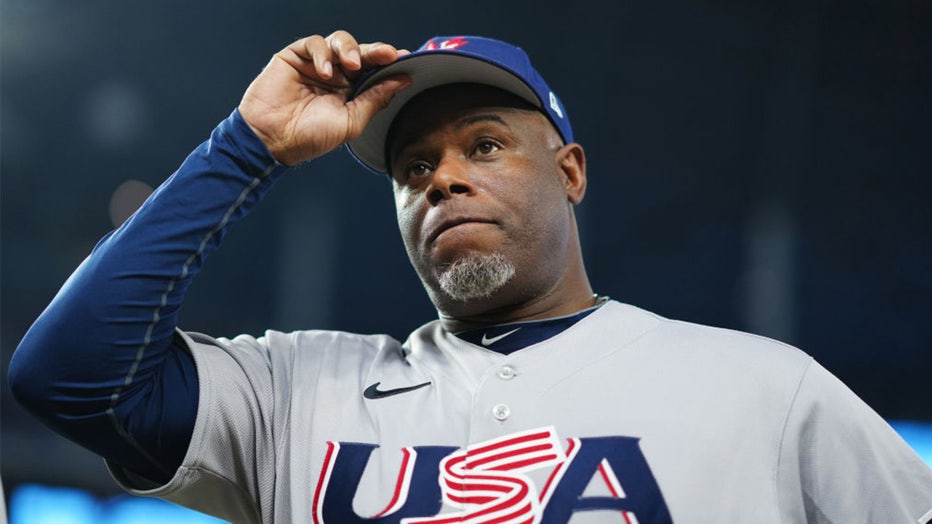
“COME ON, YOU BIG DUMMY!” — The Sentence That Changed the Dansby Swanson Conversation Forever
There are moments in sports when a single sentence cuts through years of noise. No spin. No diplomacy. No careful PR cushioning. Just truth, delivered with enough force to stop an entire conversation cold.
Ken Griffey Jr. provided one of those moments.
“Come on, you big dummy.”
That was it. One sentence. Zero mercy.
It wasn’t shouted from a podium or wrapped in a viral monologue. It wasn’t softened with qualifiers or followed by a polite laugh. It was blunt, almost dismissive — the kind of line only someone with unquestioned credibility can afford to drop.
And it was aimed squarely at the lazy, recycled criticism that has followed Dansby Swanson for years.
Griffey didn’t just defend Swanson. He detonated the framework people have been using to judge him.
For a long time, Dansby Swanson has lived in a strange in-between space in baseball culture. Too talented to dismiss. Too inconsistent, critics say, to fully celebrate. He’s been labeled overrated, overpaid, overpraised — a star who somehow never quite satisfies the expectations attached to his name.
And yet, the same critics often struggle to explain exactly what Swanson is failing at.
That contradiction is what Griffey exposed with one sentence.
Because when Ken Griffey Jr. calls you out, it’s not just opinion. It’s an indictment.
Griffey knows what elite looks like. He knows what pressure does to a player. He knows what it means to have your career reduced to talking points by people who never stood in the box with 40,000 eyes burning holes in their back.
And he knows when criticism stops being analysis and starts being lazy.
Dansby Swanson’s numbers have never been empty. Gold Glove defense at shortstop. Power that plays in October. Leadership that managers trust without hesitation. A presence in the clubhouse that doesn’t show up on Baseball-Reference but absolutely shows up in winning seasons.
Yet somehow, the narrative never quite lets him breathe.
If he hits .250 with power and elite defense, the response is that he’s streaky.
If he anchors an infield, the response is that someone else could do it cheaper.
If he struggles for a month, it’s treated as proof of a long-held belief rather than part of a 162-game grind.
Other players get grace. Swanson gets audits.
That’s the double standard Griffey was calling out — even if he didn’t bother spelling it out.
“Come on, you big dummy” wasn’t aimed at one person. It was aimed at an entire way of talking about players like Dansby Swanson. Players who don’t fit the easy boxes. Players who lead quietly. Players who are judged less on impact and more on expectation management.
Griffey grew up in an era where superstardom didn’t require perfection. You could strike out. You could slump. You could be human. The greatness was measured over time, not clipped into weekly verdicts.
Today’s discourse doesn’t work that way. It hunts for flaws because flaws generate engagement. And Swanson, with his high profile and calm demeanor, has been an easy target.
What made Griffey’s defense so powerful wasn’t the volume — it was the authority.
This is a man who could have stayed silent. Who had nothing to gain by stepping into the debate. Who has seen enough generations of baseball come and go to know that most arguments aren’t worth touching.
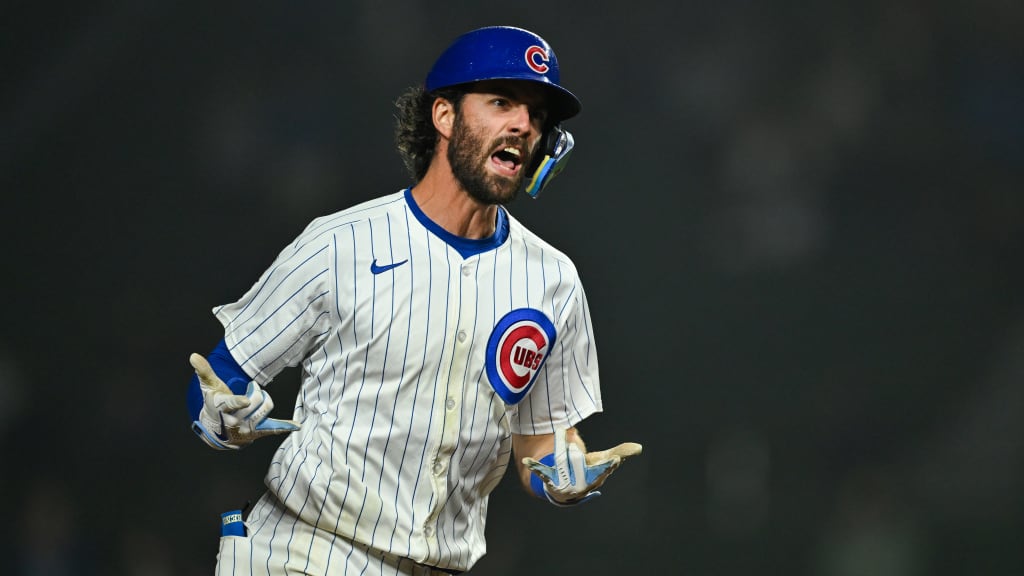
But he touched this one.
Because somewhere along the line, the conversation about Dansby Swanson stopped being fair.
And Griffey wasn’t having it.
He didn’t recite stats. He didn’t cite awards. He didn’t build a case like a lawyer. He did something far more devastating: he treated the criticism as beneath serious consideration.
That’s the ultimate flex.
When a legend dismisses your argument with a sentence, he’s telling the world it doesn’t deserve oxygen.
And that’s why this moment matters.
Not because it makes Dansby Swanson untouchable. Not because it suddenly erases every critique. But because it resets the baseline. It forces people to ask a harder question: are we evaluating the player in front of us, or the version we decided he was supposed to be?
Swanson has never claimed to be perfect. He’s never demanded universal praise. He’s just shown up, year after year, playing premium defense at a premium position, taking responsibility when things go wrong, and earning the respect of the people who actually share a field with him.
That respect is harder to fake than any stat line.
Ken Griffey Jr. understands that better than most.
He also understands something else: narratives stick unless someone with weight is willing to challenge them. Not politely. Not carefully. But directly.
That’s what that sentence did.
It drew a line in the sand.
On one side is the easy discourse — the hot takes, the box-score judgments, the endless moving of goalposts. On the other is the reality of baseball as a long, grinding test of skill, resilience, and accountability.
Griffey chose his side. Loudly.
And now, whether critics like it or not, the conversation around Dansby Swanson has changed. Every cheap shot carries a little more risk. Every lazy take sounds a little thinner. Every dismissal has to answer a simple question:
If this player is so flawed, why do the people who know the game best keep standing up for him?
“Come on, you big dummy.”
Sometimes, that’s all it takes.