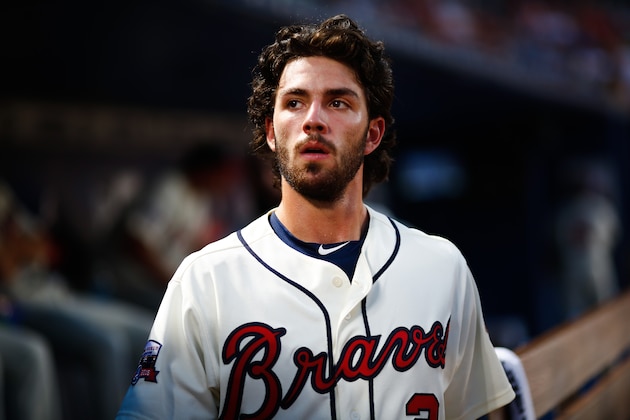
“I Don’t Think He’s That Talented”: Walt Weiss Ignites Firestorm with Brutal Take on Former Braves Star Dansby Swanson — and Swanson’s 7-Word Reply Changes the Narrative Forever
When a former Major League manager questions the talent of a player who has built a reputation on consistency, leadership, and postseason poise, controversy is inevitable. But when that player is Dansby Swanson — the former Atlanta Braves shortstop and World Series champion — the reaction becomes seismic.
That is exactly what happened when Walt Weiss, a respected former MLB manager and longtime baseball mind, delivered a blunt assessment that instantly sent shockwaves through the baseball world.
“I don’t think he’s that talented.”
Seven words. Cold. Direct. Unforgiving.
Within hours, those words ignited debate across fan bases, clubhouses, and media circles. Was Weiss offering honest baseball analysis, or was he drastically underselling one of the most reliable shortstops of his generation? And more importantly — how would Swanson respond?
As it turns out, his answer would be even more powerful than the criticism itself.
A Comment That Hit a Nerve
Walt Weiss has never been known as a provocateur. A former Rookie of the Year, World Series champion, and respected manager, his opinions carry weight. That’s precisely why his assessment of Swanson landed like a thunderclap.
The comment reportedly came during a broader discussion about player ceilings, raw tools, and how teams evaluate “true elite” talent versus dependable production. Weiss suggested that Swanson, while solid, lacked the natural ability that separates stars from superstars.
To some, it sounded like old-school baseball thinking — prioritizing raw athleticism over preparation, intelligence, and leadership. To others, it felt dismissive, even unfair.
After all, Swanson’s resume speaks loudly.
A cornerstone of the Braves’ 2021 World Series run.
A Gold Glove winner.
A clubhouse leader.
A player who shows up every single day.
Yet Weiss’s words reopened an old debate in baseball: What does “talent” really mean?
Dansby Swanson’s Unconventional Rise
Swanson was never the flashiest player on the field. Even as the No. 1 overall pick in the MLB Draft, he wasn’t hyped as a generational athlete. His path to stardom was built differently — on discipline, preparation, and relentless improvement.
With the Braves, Swanson endured early struggles that would have broken many players. Fans questioned him. Analysts doubted him. Social media dissected every slump.
Instead of pushing back publicly, Swanson worked.
Year after year, he sharpened his defense, improved his plate approach, and became one of the most reliable shortstops in the National League. His leadership in Atlanta wasn’t loud — it was steady. Teammates trusted him. Coaches leaned on him. Fans grew to respect him.
By the time the Braves lifted the World Series trophy in 2021, Swanson had long proven he belonged — regardless of what skeptics once believed.
Which made Weiss’s comment feel like a step backward in the narrative Swanson had already rewritten.
The Baseball World Reacts
Reaction was immediate and intense.
Former players rushed to defend Swanson, pointing to his consistency, baseball IQ, and postseason track record. Analysts argued that talent should not be reduced to bat speed or highlight-reel athleticism.
Fans, especially those in Atlanta and Chicago, flooded social media with clips, stats, and testimonials highlighting Swanson’s value.
The debate split the baseball community into two camps:
-
Those who believe elite talent is innate.
-
Those who believe greatness is built.
And then, quietly, Dansby Swanson spoke.

Seven Words That Stunned Everyone
Swanson didn’t fire back.
He didn’t defend himself.
He didn’t mention Weiss by name.
When asked about the comment, Swanson paused, smiled slightly, and said:
“I’ll keep showing up and working.”
Seven words.
No bitterness. No ego. No resentment.
Just resolve.
In an era where athletes often respond with lengthy statements or emotional rebuttals, Swanson’s answer felt refreshingly powerful. It wasn’t just a reply — it was a philosophy.
Those seven words encapsulated his entire career.
Why Swanson’s Response Mattered More Than the Criticism
Swanson’s response reframed the entire controversy. Instead of amplifying Weiss’s criticism, he diminished it by refusing to engage in the noise.
Veteran players recognized it immediately. That response wasn’t weakness — it was confidence.
Confidence built on years of preparation.
Confidence built on accountability.
Confidence built on knowing exactly who you are.
In clubhouses around the league, Swanson’s reply was praised as the definition of professionalism. Young players saw a blueprint for handling doubt without losing focus.
Sometimes the most powerful statement an athlete can make is not with numbers, but with restraint.
Talent vs. Impact: The Larger Conversation
Weiss’s comment unintentionally reignited one of baseball’s oldest arguments: Is talent defined by tools, or by results?
Dansby Swanson may not lead the league in exit velocity. He may never be the flashiest name on a highlight reel. But baseball history is filled with players who outperformed more “talented” peers through intelligence, preparation, and mental toughness.
Swanson represents that tradition.
He is proof that talent is not always loud.
That leadership doesn’t always show up in box scores.
That consistency can be just as valuable as brilliance.
And perhaps that’s why his seven words resonated so deeply — because they reflect a truth many in baseball understand but rarely articulate.
The Legacy Being Written in Real Time
Years from now, Walt Weiss’s comment will likely be forgotten by most fans. But Swanson’s response — and the career it represents — will remain a case study in how athletes define themselves.
Not by opinions.
Not by labels.
But by work.
Dansby Swanson didn’t need to defend his talent. He let his approach do it for him.
And in a sport that values longevity, resilience, and trust, that may be the greatest talent of all.