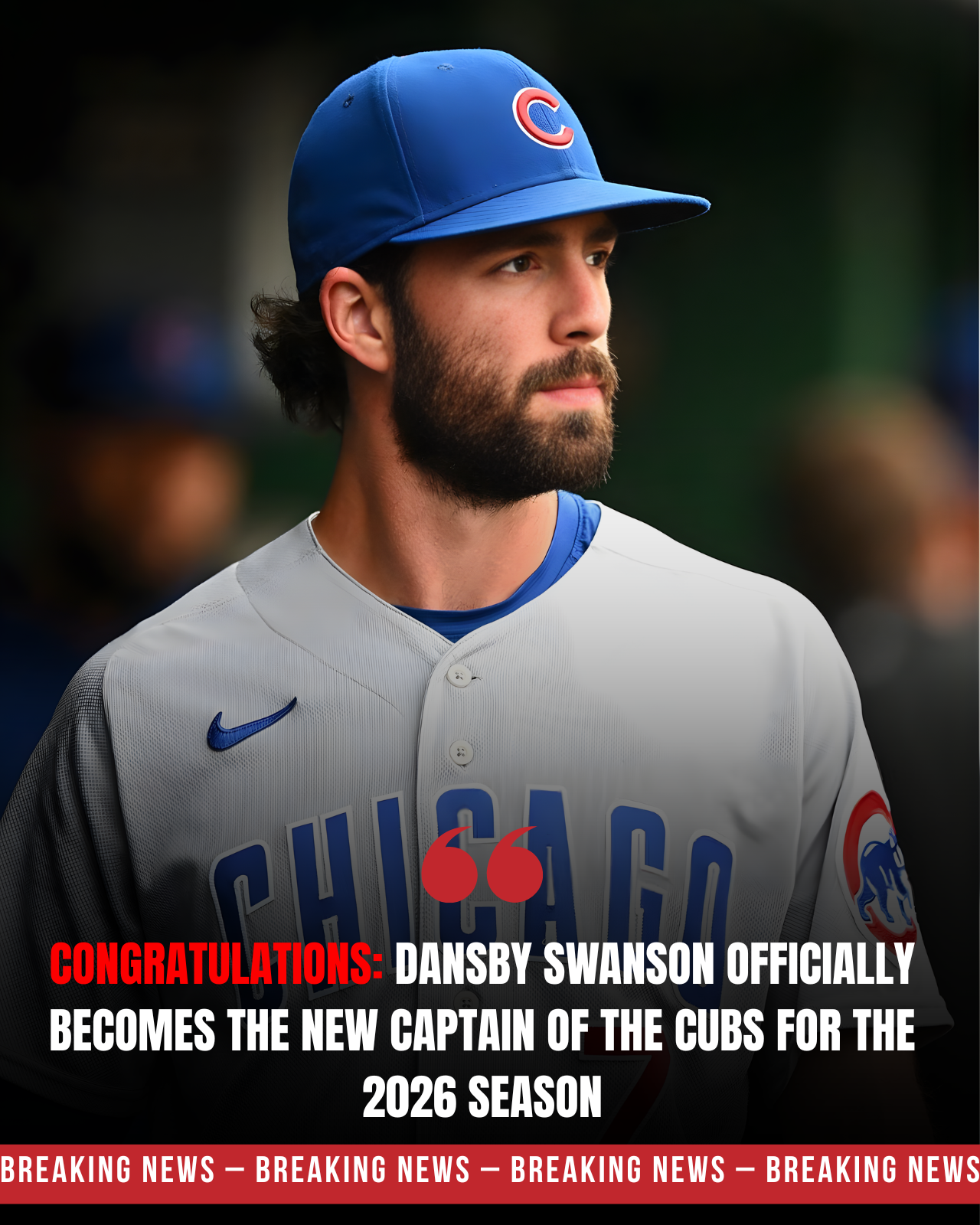
CONGRATULATIONS: Dansby Swanson Officially Becomes the New Captain of the Chicago Cubs for the 2026 Season
A new era is quietly taking shape at Wrigley Field. The Chicago Cubs have officially named Dansby Swanson as the team’s captain for the 2026 season, a decision that signals far more than a simple change in clubhouse hierarchy. It represents a clear statement about the direction of the franchise and the kind of leadership the organization believes will guide its next chapter.
For Cubs fans who have followed the team’s evolution over the past few seasons, the announcement feels both significant and fitting. Since arriving in Chicago, Swanson has steadily established himself not just as one of the team’s most reliable players on the field, but as one of its most respected voices inside the clubhouse. Now, with the captain’s title officially attached to his name, the veteran shortstop steps into a role that carries both honor and expectation.
The Cubs organization rarely uses the term “captain,” making the decision even more meaningful. Historically, the franchise has relied on collective leadership rather than formally assigning the title to a single player. By naming Swanson captain for the 2026 season, the team is making a statement about trust, stability, and the importance of leadership during a period when the roster continues to blend experienced veterans with emerging young talent.
Inside the clubhouse, Swanson’s leadership style has long been evident. Teammates often describe him as calm, focused, and relentlessly professional. While some leaders command attention through fiery speeches or emotional outbursts, Swanson leads through preparation, consistency, and quiet authority. Those qualities have gradually made him one of the most influential figures in the Cubs’ locker room.
Manager Craig Counsell has spoken repeatedly about the importance of leadership that extends beyond statistics. In modern baseball, where analytics, roster movement, and constant competition define daily life, maintaining a steady presence can be just as valuable as hitting home runs or turning double plays. Swanson, by many accounts, embodies that steady presence.
His work ethic has become a standard that younger players try to match. Early workouts, detailed defensive preparation, and a deep understanding of game situations have made him an example for teammates still learning the demands of a full major league season. Coaches often note that players naturally gravitate toward Swanson for advice, whether they are seeking insight about defensive positioning, mental preparation, or the pressure that comes with playing in a historic baseball city like Chicago.

The responsibility of captaincy will now amplify that influence. Being named captain means becoming the bridge between players, coaching staff, and the front office. It means setting the emotional tone after difficult losses and maintaining focus during long winning streaks. It means representing the team publicly while ensuring the clubhouse remains united during the inevitable challenges of a 162-game season.
For Swanson, the opportunity represents both recognition and responsibility. Throughout his career, he has been known as a player who values team culture as much as individual success. Those who have played alongside him often speak about his commitment to accountability. Mistakes are addressed honestly, improvements are pursued relentlessly, and the focus always returns to the team’s larger goals.
That philosophy aligns perfectly with what the Cubs hope to build in the coming years. The organization has invested heavily in developing young talent while maintaining a competitive roster capable of challenging in the National League. With promising players continuing to emerge and experienced veterans anchoring key positions, leadership inside the clubhouse has become increasingly important.
Swanson’s appointment reflects the belief that he can guide that balance. Younger players entering the major leagues face intense pressure, particularly in a market as passionate as Chicago. The captain’s role often involves helping those players navigate expectations while reinforcing the habits required to succeed at the highest level.
At the same time, the role also requires maintaining unity among veterans who bring different personalities, experiences, and perspectives into the clubhouse. Swanson’s reputation as a communicator and listener has made him well suited for that challenge. He is known for understanding when to speak and when to let teammates find their own solutions.
The announcement has already generated discussion across the baseball community. Analysts and former players alike recognize that while the captain’s title does not change a player’s statistics, it can shape the identity of a team. Leadership has often been an intangible factor separating good teams from great ones. By formally naming Swanson captain, the Cubs are emphasizing the importance of that intangible element.
Fans, too, have responded with enthusiasm. Over the past several seasons, Swanson has become a fan favorite not only for his defensive excellence and competitive spirit, but for the professionalism he brings to the field every day. In a city that values hard work and loyalty, those qualities resonate deeply.

Wrigley Field has always been a place where tradition and expectation coexist. The ballpark carries the weight of more than a century of baseball history, and every new chapter adds another layer to that story. By placing the captain’s title on Swanson’s shoulders, the Cubs are connecting their present ambitions with the long tradition of leadership that has shaped the franchise.
What remains uncertain, of course, is how the 2026 season will ultimately unfold. Baseball is unpredictable by nature. Injuries, slumps, unexpected breakouts, and dramatic moments can redefine a season at any time. Yet strong leadership often becomes the thread that holds a team together through those unpredictable stretches.
For Swanson, the challenge will be embracing the added visibility without allowing it to distract from the fundamentals that made him successful in the first place. His focus will remain on the same daily routines that have defined his career: preparation, communication, and a commitment to helping his teammates perform at their best.
Those who know him best believe he will approach the captaincy exactly the same way he approaches every inning of every game. Quietly. Professionally. Determined to elevate the players around him.
As the Cubs prepare to open the 2026 season, the symbolism of the moment is impossible to ignore. A respected veteran has been entrusted with guiding a talented roster into the future. The decision signals confidence from the organization and belief from the clubhouse.
Whether this leadership shift ultimately helps propel the Cubs toward postseason success remains to be seen. But one thing is already clear. The franchise has chosen its voice, its example, and its captain.
And for the Chicago Cubs, the next chapter begins with Dansby Swanson.